
Expert Attic & Home Insulation Solutions
How much is your attic costing you every month?
Did you know that nearly 70% of homes are under-insulated? That means your home insulation isn’t performing as it should, resulting in higher utility bills. Under-insulation causes your HVAC system works overtime to maintain temperature, moisture problems you won’t see unless you’re inspecting your attic regularly, and ice dams that damage your roof in winter.
Most homeowners don’t realize their insulation is inadequate until they’re dealing with ice dams or sky-high energy bills, but we can assess your attic during a roof inspection and solve the problem before it costs you thousands. We treat attic insulation and ventilation as an integrated system—proper R-values balanced with airflow to maintain consistent temperatures, prevent moisture buildup, and protect both your roof structure and living space.
How Long Has It Been Since You've Been Inside Your Attic?
Let Us Help You Save & Restore Your Home Insulation to Code
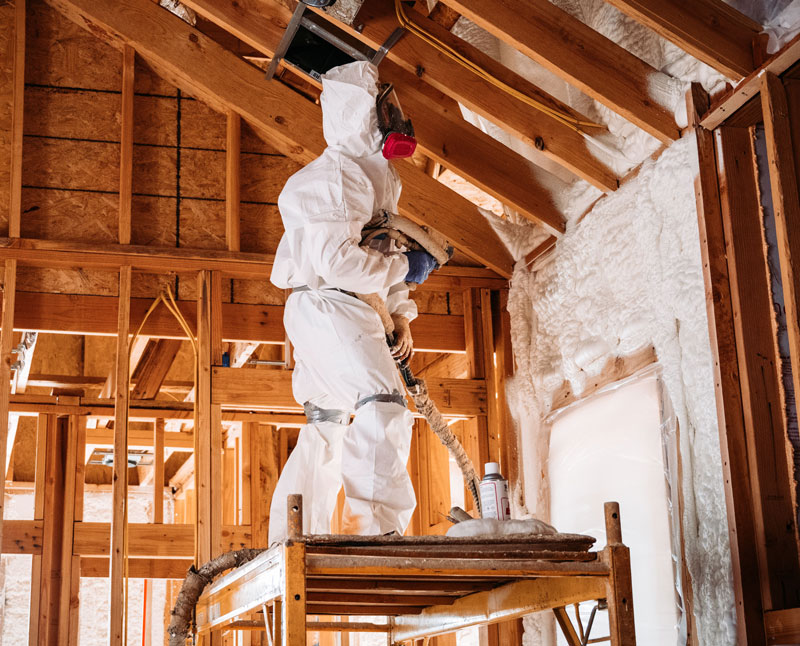
We’ve been insulating Wisconsin attics since 1971 and understand how home insulation and ventilation work together as a complete system. We provide professional inspections and free estimates to identify issues and spare you from costly repairs and energy loss. We offer spray foam vapor barriers and fiberglass installations prevent heat and damage to your home and roof. In the long run, proper home insulation will save you money on your energy bills and preventing costly repairs in the future.
- Reduction in Energy Bills
- Prevents Heat Loss
- Eliminate Ice Dams Formations
- Prevent Moisture Damage
0% Interest & No Payments for 12 Months
Flexible Terms Up to 30 Years for All Exterior Projects
Home Insulation Services
Spray Foam Insulation
This insulation is sprayed into place and expands to fill cavities, creating an excellent air seal. It can be either open-cell or closed-cell, with closed-cell being denser and more rigid.
Fiberglass Insulation
Often made of fine glass fibers, this is a very common and inexpensive type available as batts, rolls, or loose-fill insulation. It is good at reducing heat and sound flow.
Cellulose Insulation
Mineral Wool
Rigid Foam Board
Radiant Barriers
What to Expect During a Home Insulation Install
Assessment
We will inspect the area, discuss options, and look for problems like air leaks, damaged areas, or wiring that may need to be addressed before work can begin.Preparation
Our team will carefully remove any old insulation and prepare the site to begin installation.
Installation
Our crew will install the new insulation using the most effective methods to ensure maximum performance and longevity.
Clean-Up
Our team will fully clean the job site which includes using a HEPA vacuum to remove dust and debris.
Home Insulation FAQ
Why Should I get Insulation Replaced?
How Do I Know What Insulation to Choose?
What Is R Value?
What R Value Do I Need?
The R-value insulation you need depends on your climate zone and the part of the house you are insulating. In colder climates, you need higher R-values for all areas, with attics typically requiring R-49 to R-60, exterior walls needing R-13 to R-21 (depending on wall depth), and floors needing R-25 to R-30. You can find the specific recommendations for your region by checking local building codes or the U.S. Department of Energy’s climate zone map